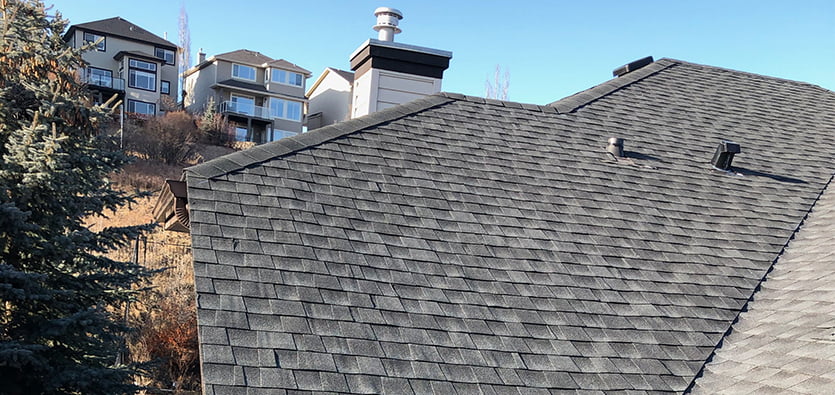
One of the most commonly asked questions by homeowners is when is the best time to replace your asphalt shingles. Although many roofing companies limit their roof replacement contracts to high season, it is possible to replace a roof in late fall, winter, and early spring.
The duration of the asphalt roofing season can vary depending on your location. However, it is possible to install new asphalt shingles as long as temperatures are mild, and the chance of wind, rain and snow is low.
The high season for roofing in Southern Alberta runs from late Spring to Fall when temperatures are above 10-15°C but work can be done in the offseason and even winter with certain weather conditions.
Some of the factors that mark the end of asphalt roofing season include:
Shingles Becoming Brittle
At freezing temperatures, the asphalt shingles can become brittle and more prone to breakage. To prevent this, many roofing companies avoid working in below-zero temperatures. Even if the shingles are stored at a warm temperature prior to installing them, exposure to cold temperatures at the time of installation is enough to make them brittle.
At cold temperatures, the nails cannot safely penetrate the shingle without compromising the asphalt in the shingle. Asphalt shingles by GAF and CertainTeed come with certain warranty coverage when it comes to installation in cold weather. However, manufacturers have guidelines that roofing companies have to follow if they want coverage.
Cold shingles may crack when nailed to a deck, this can cause roof failure and leaks. However, this will vary depending on the shingle material. Fibreglass asphalt shingles are more susceptible than SBS modified rubber asphalt shingles.
Lower Safety
Another common reason why roofing companies avoid working in sub-zero temperatures is safety concerns. Cold temperatures can lead to the build-up of frost on the shingles and roof deck which can make the work area slippery.
Equipment Failure
The compressors and nail guns needed to install a new roof cannot work to their full potential in below-freezing temperatures. This can lead to delays and inefficiencies in the application of the shingles.
Alberta Chinooks
When Alberta’s weather cuts us some slack we are able to install asphalt and modified asphalt shingles in the winter. The chinook belt lies almost exclusively within southern and central Alberta. For the uninitiated, Chinooks are warm, dry, gusty, westerly winds that blow down the Rocky Mountains. Every few days, these winds cause unseasonable warming.
In Alberta, chinooks can happen 30-35 times per year. The maximum daily temperature anomaly associated with the wind ranges from +13°C in the northwest to +25°C in the southeast. Hence, on these days contractors are able to replace asphalt shingles without having to worry about the shingles becoming brittle in cold temperatures, frozen sealants, equipment failure, or frost delays.
Of course, if we have to deal with the snow on the roof, it can easily be swept off using safety gear and equipment.
Alternatives to Asphalt Shingles
If you need or would like to replace the asphalt shingles on your roof during the winter season, consider an SBS Modified Class 4 shingle. These shingles are specifically designed to protect your roof from storm damage and extreme weather. Unlike asphalt shingles, they come with a polymer-based mesh on the back which prevents them from breaking. Moreover, the asphalt is mixed with an SBS polymer blend to create a rubberizing effect. Hence, the shingle is more flexible in cooler temperatures and resists breakage from handling and installation in below-freezing temperatures. Other options for a winter roof replacement include Euroshield’s Vermont Slate or Beaumont Slate, made from recycled rubber from tires right here in Calgary or the F-Wave synthetic roofing shingle, which also has no asphalt and no granules.
About AKRoN Roofing
We are proud to announce that we are the first roofing company in Canada to be working with and installing the F-Wave REVIA premium synthetic residential shingles.
AKRoN Roofing provides transferable, ten-year workmanship warranties on all sloped roof installations and can offer up to a 25-year workmanship warranty with a GAF or CertainTeed roof. We hold the highest installation standards on all our roofs and we educate homeowners about products, installation, and warranties. AKRoN Roofing is a proud member of the Alberta Allied Roofing Association.
We offer various products for sloped roof replacements with a Class 4 rating from UL, including SBS modified architectural shingles, Euroshield recycled rubber shingles, and F-wave Synthetic shingles. Our other services include, but are not limited to, residential re-roofing with asphalt shingles, TPO, and 2-ply membranes for flat roofing, roof repairs, and inspections of all types of roofing material by our qualified team.
AKRoN Roofing is proud of its A+ rating with BBB plus other certifications and accreditations. You can check out our accreditations and certifications here, or contact us here for more information.